DAW Integration Guide
Vovious Manual
For further instructions on how to use Vovious in general please refer to the
Vovious User Manual
ARA on Apple Silicon
Before Apple Silicon, Logic runs plugins in its own process. In other words, the plugin becomes part of Logic's process.
With Apple Silicon, Logic starts a separate process and runs a plugin in this separate process. (You can see this process in the Activity Monitor app. It's called AUHostingService or AUHostingCompatibilityService and is started when you insert a plugin.) This is comparable to running Logic beside Safari; both apps run in separate processes.
Actually, the new behavior is an advantage for the user because:
- If a plugin crashes, Logic doesn't really care about it because the crash occurs in a different process, so Logic’s process doesn't crash too.
- You can use older Intel plugins on Apple Silicon because every process has its own CPU-architecture, but different processes can have different architectures. So Logic can run in a native Apple Silicon process while your Intel plugin runs in an Intel process and both can work together.
The disadvantage is that communication between different processes needs a so-called IPC (Inter Process Communication). In case of ARA, it's very difficult to develop this IPC because ARA is a very complex interface with much communication between host and plugin, and everything has to be absolutely in sync!
Celemony, the ARA inventors and main developers, are currently doing an incredible job to make this ARA-IPC happen one day. They put a lot of effort on this topic. Everyone who is familiar with programming or computer science can follow up the development at https://github.com/Celemony/ARA_SDK.
However, the ARA-IPC is not yet complete! Once the development of the ARA-IPC is complete, it has to be implemented on both sides (Logic and the ARA-Plugins).
We are continuously monitoring this issue and doing lots of testing with our internal ARA-Test-Host in combination with a IPC-capable development-version of Vovious.
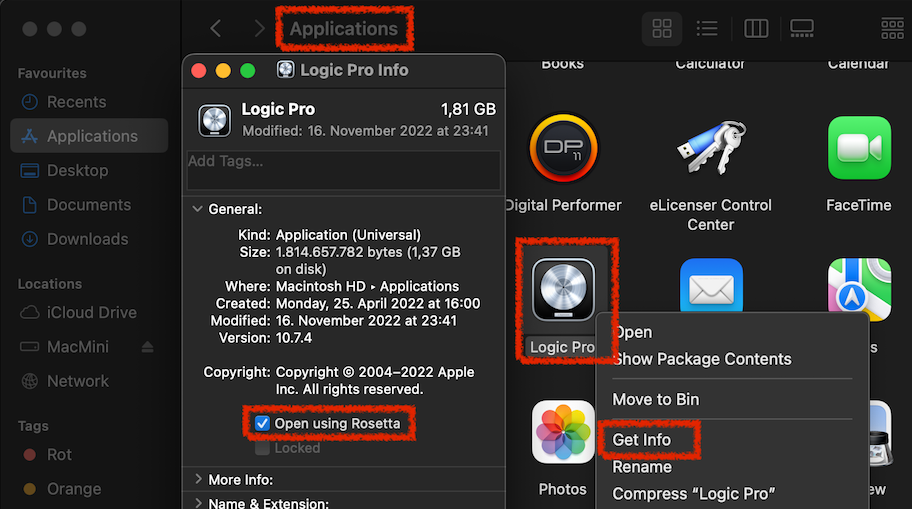
In order to still use Vovious in Logic with ARA on Apple Silicon, we recommend starting Logic in "Rosetta Mode".
To enable "Rosetta Mode":
- Open your Applications folder
- Right-click on Logic Pro, select "Get Info"
- Activate "Open using Rosetta" in the Info dialog
Note
Vovious works best on clean vocal recordings with no echo, reverb or other effects on the signal!
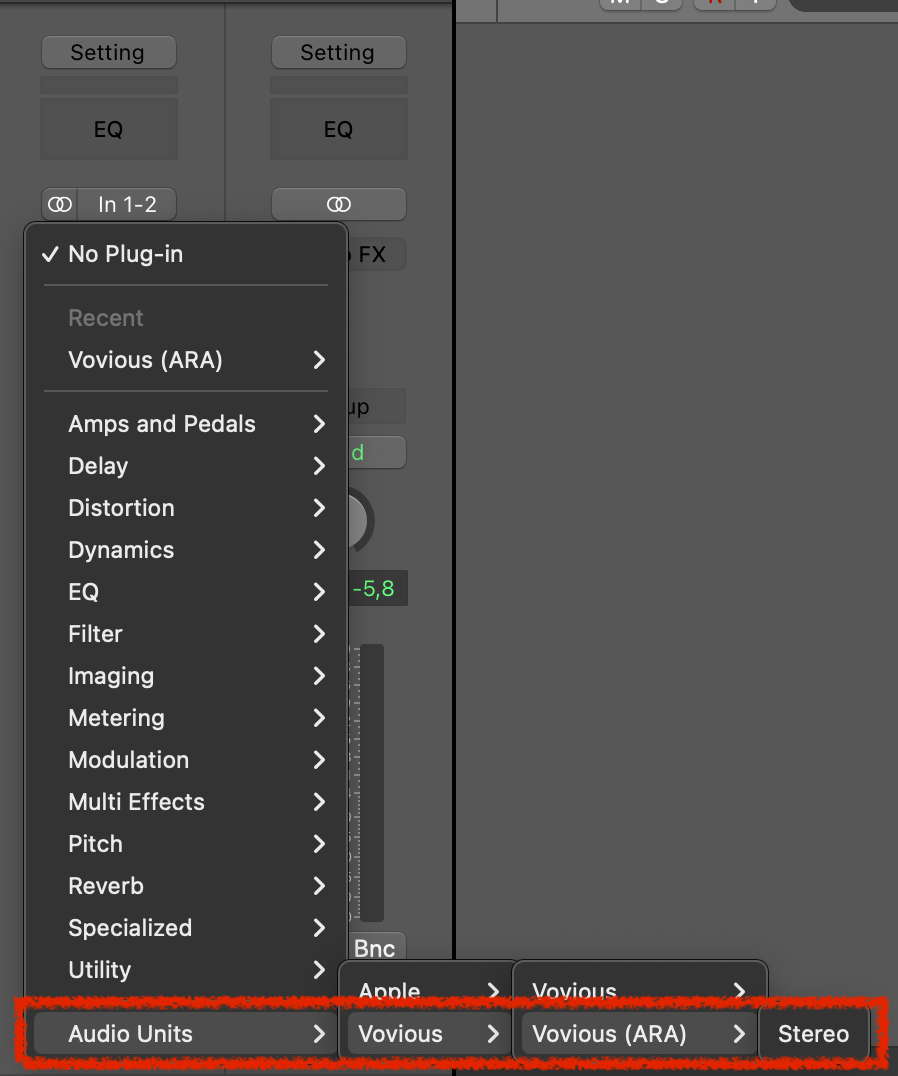
Insert Vovious
To use Vovious with ARA, you have to put it in the first effect slot. Now you have to press the play button to transfer the audio to Vovious. After Vovious has analysed the audio material, you can start editing.
Resizing Window
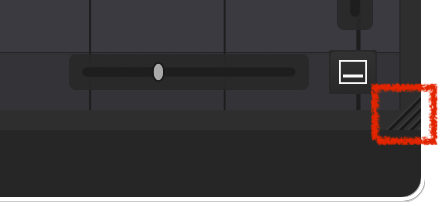
To resize the Vovious window, you need to use the "Resize Corner" at the bottom right.
Syncing Changes
Maybe you have to press the play button occasionally to get Logic syncing the changes with Vovious.
Note
The cursor (playhead) in Vovious may get stuck in areas when there is no clip. This is not a bug. Logic mutes/disables plugins when there is no audio to process, so Vovious doesn't get the current position.
Audio Preview
In general, Logic does not allow plugins to play audio when playback is stopped. For this reason, the Vovious preview function does not work in Logic. Logic makes an exception for a few plugins. This exception is implemented (hard-coded) in the Logic app. We hope to get an exception for Vovious in Logic soon. If this happens, we will let you know here!
Working With Multiple Tracks
When working with multiple tracks, it can be helpful to switch between the tracks via TrackSwitcher (T key).
Reference Tracks:
To display tracks as reference, activate them by ticking the box on the right-hand side.
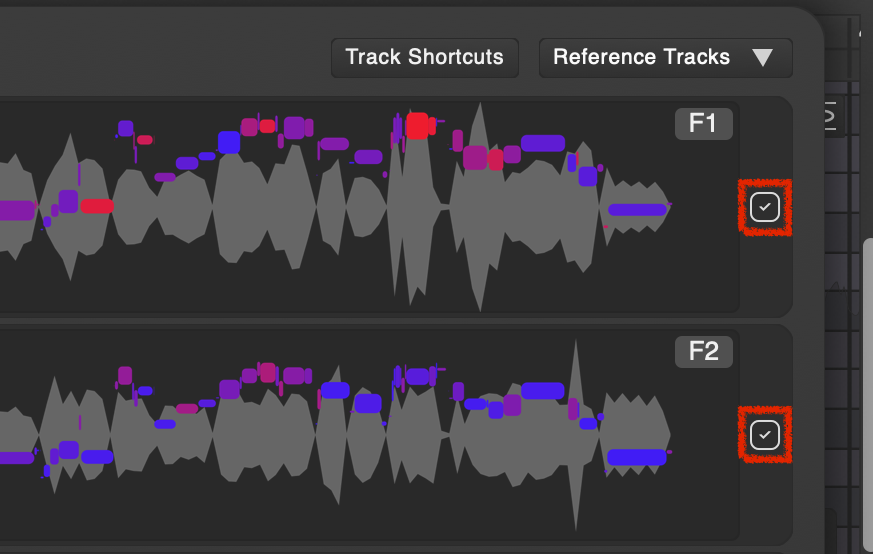
Note: Unfortunately, Logic does not provide track colors.
You can also switch between tracks using keyboard shortcuts.
(It may be necessary to change the keyboard shortcuts so that they do not conflict with keyboard shortcuts used by your DAW)
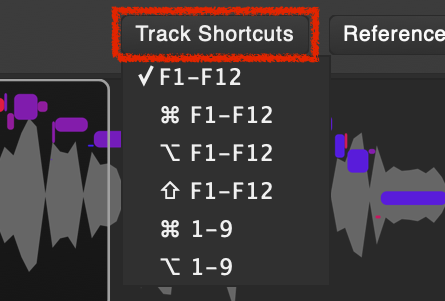
Furthermore, you can switch between tracks by double-clicking on the notes of the reference tracks.
Track Name
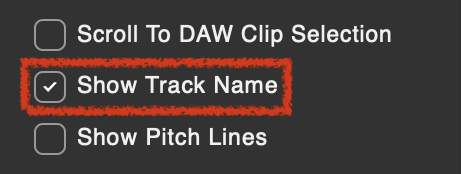
For better orientation, you can display the name of the currently selected track in the upper left corner of Vovious.

To show the track name, you must activate "Show Track Name" in the Sidebar.
Vertical Auto Zoom
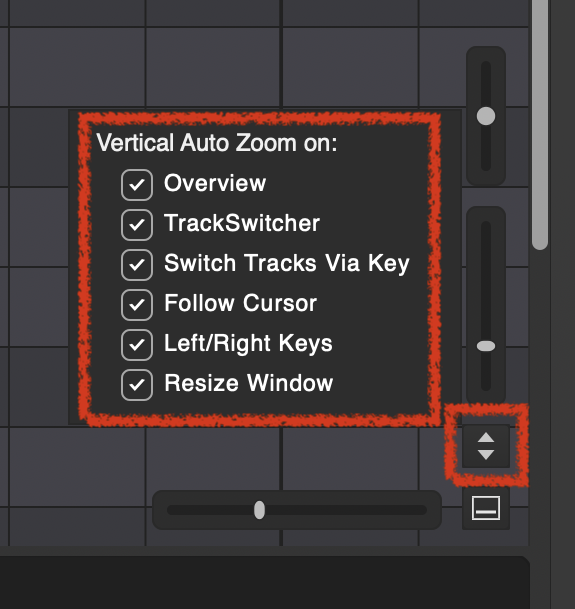
The Vertical Auto Zoom (the button on the bottom right or Shortcut: Z) lets Vovious automatically adjust the vertical zoom so that all notes in the current time range are visible and the available screen space is used optimally.
The Vertical Auto Zoom does include your selected reference tracks.
By holding down the left mouse button or right-clicking on the Vertical Auto Zoom button, you can select from a menu which actions will automatically trigger the Vertical Auto Zoom:
Using Keyboard Shortcuts
If you use keyboard shortcuts in Vovious, it can be useful to activate "Keyboard Focus On Mouse Enter". Then Vovious catches the keyboard focus as soon as you move the mouse into Vovious. Otherwise, you have to activate the keyboard focus with a mouse click into Vovious. This can be helpful if your keyboard shortcuts accidentally end up in your DAW because you forgot to set the focus.
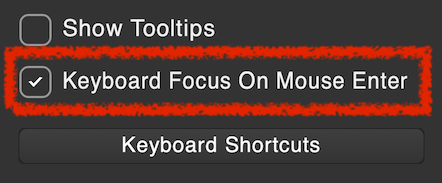
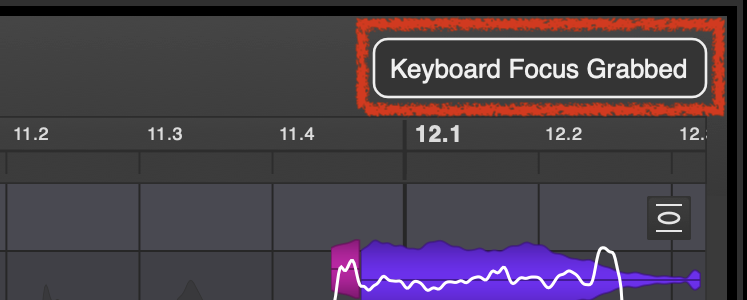
The disadvantage is that if you accidentally move the mouse through Vovious, the keyboard focus is taken away from your DAW. You will be notified when the keyboard focus is grabbed by a message in the upper right corner of Vovious.
Learning Keyboard Shortcuts Quickly
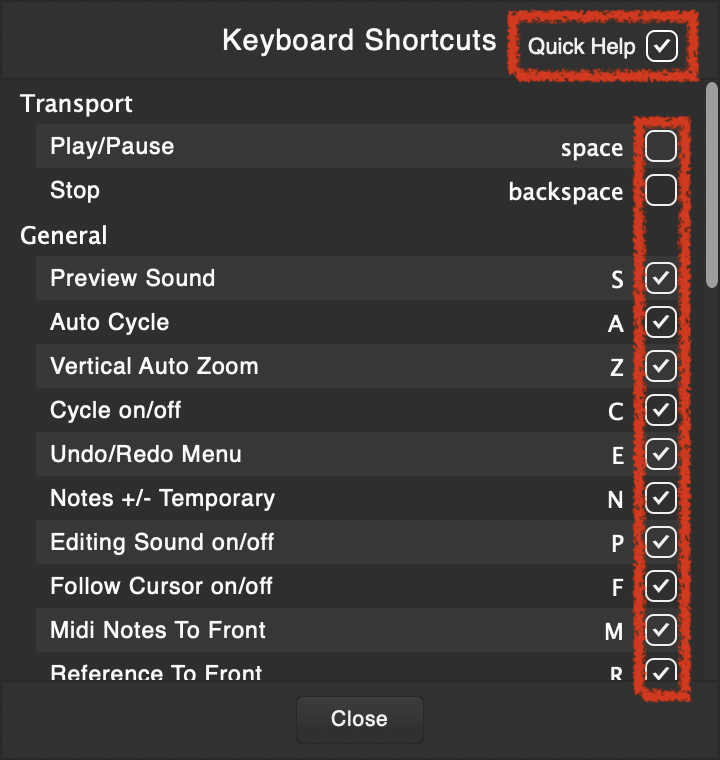
To learn the keyboard shortcuts more quickly, we recommend displaying the QuickHelp overlay:
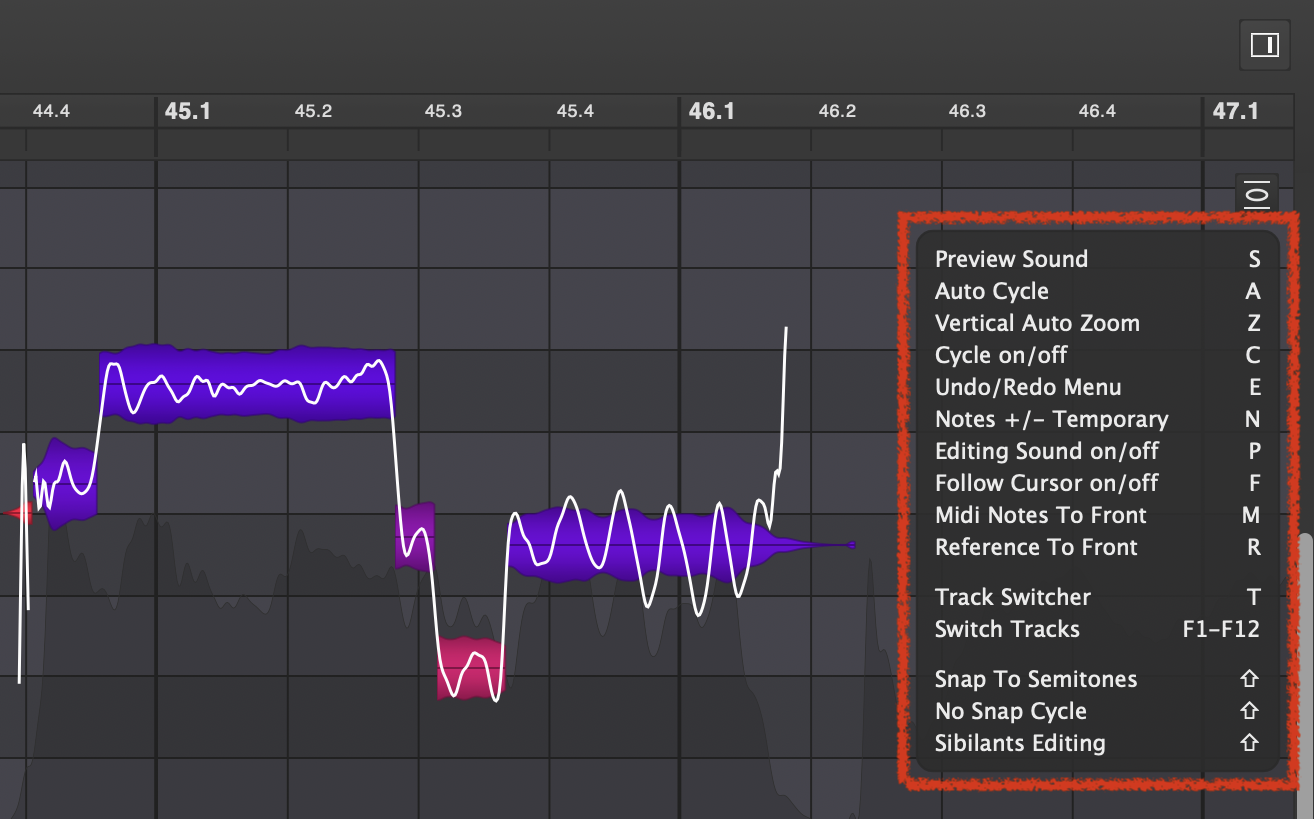
To do this, click on the "Keyboard Shortcuts" button in the SideBar...
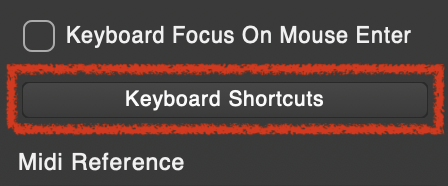
...and activate QuickHelp in the Keyboard Shortcuts dialog. You can select which shortcuts are displayed in the QuickHelp overlay. However, less is sometimes more when it comes to maintaining an overview.